

T:+91 7669-933-404
Email: info@jpinternational.co.in
Plot 3A, Sector Omega 1, Near Pari Chowk, Greater Noida, GB Nagar, Pin Code 201308

T:+91 7669-933-404
Email: info@jpinternational.co.in
Plot 3A, Sector Omega 1, Near Pari Chowk, Greater Noida, GB Nagar, Pin Code 201308
Learning continues to be the cornerstone of success. Education is one such tool that defines the course of one’s life. Behind the urge to engage in lifelong learning and exploring various new avenues to enrich one’s knowledge lies one key element - student motivation. Proper nurturing of motivation is not only critical towards successful academic output, but also towards producing strong, curious individuals who are ready to face the demanding process of a constantly evolving world.
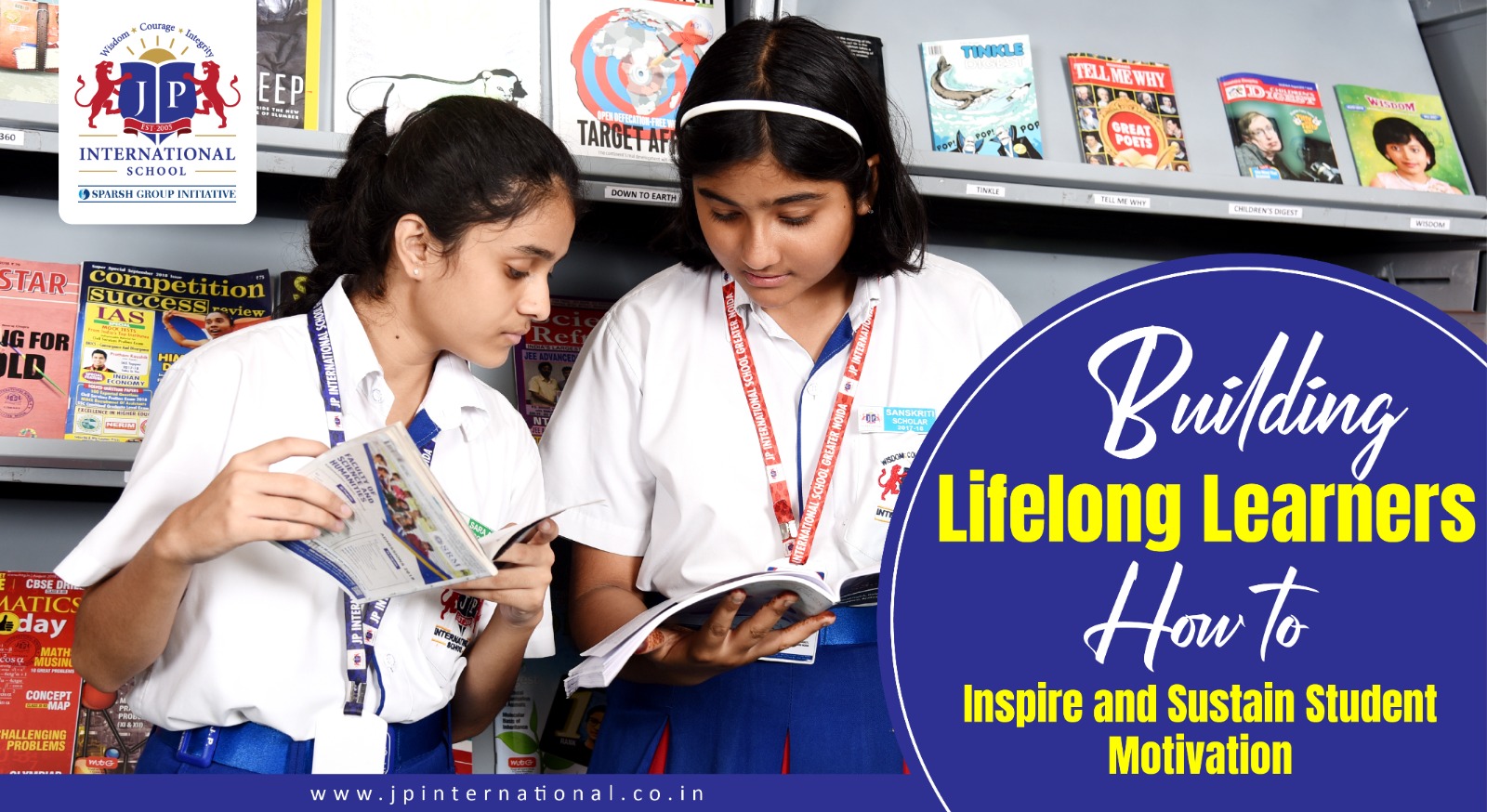
Student motivation may be classified as intrinsic or extrinsic. Intrinsic motivation is that which is brought about by an interest in the task or enjoyment in the task. For example, a student may enjoy solving maths puzzles simply because it is enjoyable. On the other hand, extrinsic motivation is driven by external rewards, such as grades, praise or recognition.
Although both types can be helpful, the intrinsic motivational type is especially essential to create lifelong learners. Internally motivated students tend to be more proactive and willing to explore subjects and conduct their research; they are also more likely to persevere through difficulties. Schools also play a critical role in developing this inner motivation by creating an environment where curiosity, creativity and purposefulness are encouraged and reinforced.
The groundwork for maintaining motivation is laid in a friendly and inclusive learning environment. Students respond better to instruction and take ownership of their learning process when they feel safe, respected and valued. It implies not just a physically secure environment, but also the need to develop a sense of emotional safety and mutual respect among peers and teachers.
Teachers must be modelled as enthusiastic individuals who provide constructive feedback and genuinely care about their students' improvement. Learning to celebrate efforts rather than results, asking questions and acknowledging small victories are some of the main tricks that ensure that students feel motivated and valued.
Being in control of the learning process will promote motivation among students. Freedom brings a sense of purpose and responsibility. Giving students freedom of choice, including choice of topics to cover in projects, deciding which types of assignments to complete or defining individual academic objectives, encourages them to be invested in the learning process.
Self-assessment and reflection are also essential, as they enable students to monitor their progress and identify areas of improvement. This not only develops metacognitive abilities, but also helps confirm the idea that learning is an individual and developmental process.
Career goals should be clear and achievable, which brings direction and meaning to the process of learning. There are higher chances of improving student motivation by ensuring that they understand their goal that they are striving to achieve. As a teacher, one can support this by helping students establish both short-term and long-term objectives that align with their interests and dreams.
Another role of teachers is to ensure that they bring forth the relevance of the chosen dream of students. Knowing what their goal means in the broader perspective makes students more committed towards setting meaningful processes of achieving them.
One of the most critical aspects of lifelong learning is a growth mindset, which is the perception that skills can be acquired through hard work and education. Learners with a mentality of confidently taking on challenges, viewing failures as a learning process and the capability to persevere in the face of challenges have a higher chance of remaining motivated to learn in the long run.
Schools can foster a growth mindset by emphasising effort over ability and attributing failures to learning opportunities. By encouraging students to view setbacks as stepping stones rather than obstacles, they are better prepared to embrace challenges in future and overcome them.
Technology applied in the learning process may be critical towards retaining the attention of students. Online tools, learning games and interactive sites can render learning more appealing and easier as well. Nevertheless, technology is not to be harnessed blindly, but rather as a gateway to provide enhanced learning, not as a replacement for the conventional system.
New-age curriculum is more comprehensive, providing students with a dynamic learning experience through the blending of learning techniques, project-based activities and cross-curricular integration. These approaches keep learners inspired as they discover, innovate and collaborate.
It is not only within the scope of educators to motivate students. Parents and the broader community can also reinforce the importance of excelling in education. Students view education as a lifelong activity when they witness that learning is valued and applied outside the classroom, whether by parents, neighbourhood initiatives or role models.
Frequent contact between schools and families, as well as the programmes of engagement with professionals or alumni, can increase students' motivation levels as they receive real-life information and gain aspirations to succeed.
Maintaining student motivation is a long-term process that must be undertaken collectively by educators, families and the community. With the development of a culture of curiosity, independence and persistence, schools will be able to create learners who will remain interested and engaged in learning long after they have graduated with their degrees.
At JP International School, we do not just lay emphasis on academic performance, but also create the kind of mindset that appreciates growth, resilience and curiosity. JP International School equips students with the skills to stay motivated and self-directed so that every child grows up ready to be a lifelong learner, prepared to succeed in a dynamic world.
Parents can support their child's motivation by showing interest in their learning, celebrating efforts rather than outcomes and modelling lifelong learning through reading, discussion and curiosity about the world.
- JP International School16 August 2025
Educators are prepared to employ cooperative strategies in their work with all students, ensuring...
4 August 2025
Believing in the power of storytelling in provoking these cognitive, social and emotional process...
26 July 2025
The educational process of activity-based learning has been demonstrated to be an effective tool ...
19 July 2025
New-age curriculum is more comprehensive, providing students with a dynamic learning experience t...
12 July 2025
This is why ever-growing numbers of families find their way to JPIS, where their children not onl...
 28 November 2024
.jpg) 27 November 2024
27 November 2024
 8 December 2022

